
Introduction
The topic I am addressing today is far from ordinary Reshaping Humanity; it touches upon one of the most critical issues facing our society. Quite often, we notice these shifts around us yet choose to turn a blind eye, brushing them off with thoughts like, “Why should I care?” or “How does this affect me?” This mindset is deeply flawed. Ignoring these changes goes against our moral responsibility and basic humanity; staying indifferent to the world around us ultimately undermines human values as a whole.
“ In this modern era, are we becoming more connected, or are we losing the very empathy that makes us human?”
1. Humanity in the Past Lessons from Our Ancestors
If we look back a few decades or reflect on the lives of our grandparents, we see a starkly different picture of humanity. In those times, people viewed each other with genuine warmth and respected every individual simply for being human. Values like modesty, moral integrity, shared compassion, patience, and mutual sacrifice were not just concepts; they were the foundation of daily life. Life was peaceful because people lived with a clear conscience, free from the regret of having turned their backs on someone in need.
Our ancestors belonged to a generation defined by selflessness and high moral character. For them, problems were never personal; they were collective. A neighbor’s sister or mother was treated with the exact same respect as one’s own, and someone else’s pain was felt as deeply as if it were their own. Social class, wealth, and status did not dictate how people treated each other. They possessed broad hearts filled with empathy, helping both relatives and strangers alike, not for personal gain or selfish motives, but out of pure human kindness.”
“Our ancestors may not have lived in modern comfort and luxury, but they carried hearts of gold and built relationships purely without self-interest.”
2. Humanity in the Modern Era A Broken System
In 2026, the very word “humanity” feels like a distant and alien concept. We have gradually transformed into machine-like beings, operating automatically without genuine feeling. It is as if human emotions have become software infected by a deep-rooted virus; one that has taken full control of our minds and hearts, rendering our sense of empathy almost impossible to restore.
Today, people remain silent even when witnessing injustice right before their eyes. The common mindset has become; “Why should I get involved? It’s not my problem, and I have nothing to gain.” What is worse is that society discourages those who do step forward to help. If a woman steps up to help someone, she is unfairly judged, mocked, or told, “Why did you interfere? What if something bad happened to you?” If a man steps in to mediate or assist, he is frequently labeled as a troublemaker or a clout-chaser.
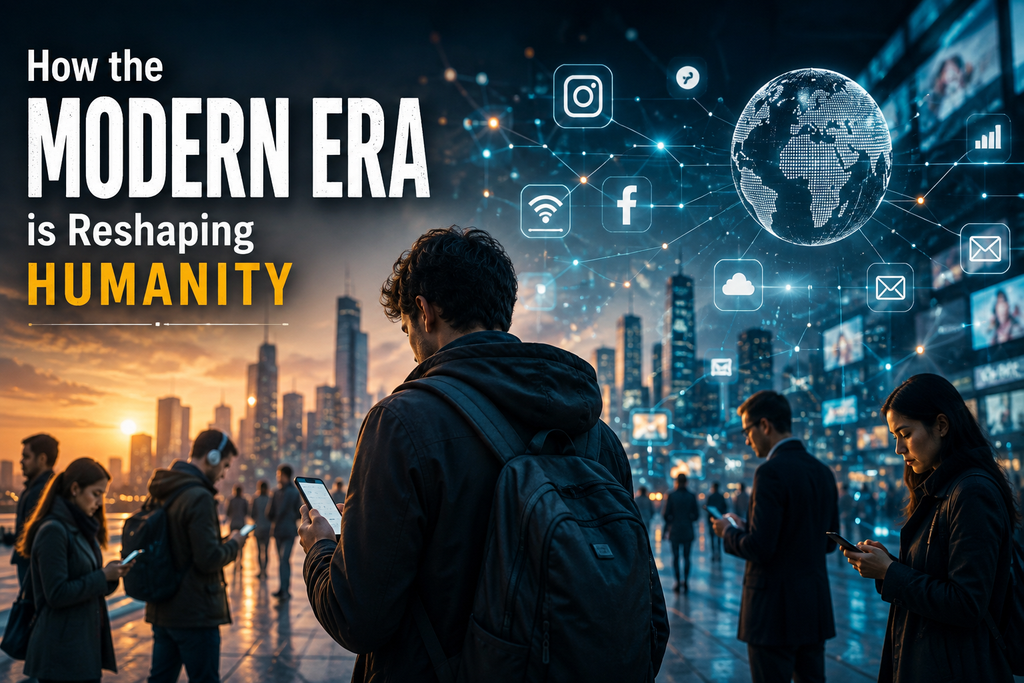
The toxic side of social media amplifies this indifference. Instead of offering a helping hand during a crisis, people pull out their phones to record videos for views and likes. Horrific incidents; accidents, street violence, or character assassination; are filmed, edited, and posted online for public entertainment. The fear of being recorded and humiliated on social media deters genuine people from intervening. If we cannot choose to be part of the solution, we must at least stop worsening the problem. If you cannot help someone, do not hinder those who try.
The Islamic Perspective
Islam places immense value on compassion, unity, and standing up for peace. It strictly opposes passive bystander behavior and commands believers to restore peace and help one another. The Quran highlights the responsibility of restoring harmony:
“The believers are but brothers, so make settlement between your brothers and fear Allah that you may receive mercy.”
Q1: How has modern technology affected our capacity for empathy?
A: While modern technology connects us globally, it often distances us locally. Constant screen exposure and social media consumption desensitize us to real-world suffering, turning human pain into digital content for views rather than an urge to help.
Q2: Why do people hesitate to intervene during an emergency or injustice today?
A: Main reasons include the “bystander effect,” fear of social media public trial, and societal judgment. People worry about personal safety, false accusations, or public ridicule, which stops them from taking a moral stand.
Q3: What can we learn from older generations to improve society today?
A: Our ancestors prioritized unconditional community support, moral dignity, and shared responsibility over self-interest. Reviving their habit of treating neighborly issues as personal issues can help rebuild lost empathy.
Q4: What role does individual responsibility play in restoring humanity?
A: Change starts at the individual level. Even if we cannot solve large-scale problems, choosing not to record someone is suffering, refraining from quick judgment, and offering basic kindness can create a ripple effect in restoring human values.
- Why does society dismiss a woman’s Decisions?
- How social media frauds and Scams are destroying our lives
- Women as the First Protector and Guardian Angel on Earth for Their Children
- The unseen reflection: Why we judge others and are judged ourselves from others
- The illusion of unlawful Affection: Why Real peace cannot found in what Islam has forbidden
Pingback: The Empty Apology How “Sorry” Lost Its Meaning in Modern Society